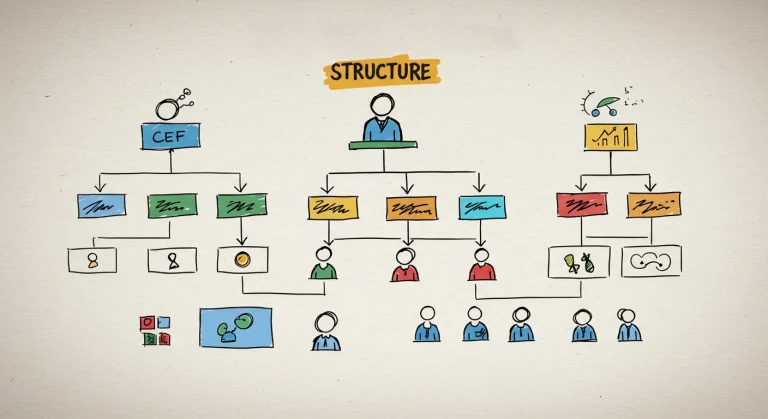
AI is transforming from a supportive tool in the workplace into an implementing and even direct decision-making actor. Tech-bros, futurists and anyone else who accepts what they hear without critical analysis or weighing it in their own words, all agree that AI will soon put many people unemployed in numerous technical and creative fields, from law and finance to logistics, marketing, and software…
According to Mustafa Suleyman, the head of Microsoft, this will happen sooner than we think.
- Fortune: Microsoft AI chief gives it 18 months
- FT: Mustafa Suleyman plots AI ‘self-sufficiency’ as Microsoft loosens OpenAI ties
From a corporate perspective, this appears to mean more savings, more profit and doing more work efficiently and without errors with fewer people.
However, there’s something most people overlook: if production, distribution, marketing and even customer relations are to be taken over by machines and AI who will sustain the economic cycle of this system?
When code becomes irrelevant for a programmer, programs for a designer, students for a teacher, lessons for students, and customers for stores… Can a society that has lost its income continue to be the fuel of the consumer economy?
The Industrial Revolution vs. The AI Revolution
Today, the relationship between artificial intelligence and humanity is being compared to the past industrial revolution. However, it’s necessary to clearly define and distinguish certain aspects.
The industrial revolution involved machines taking over tasks previously performed by humans using physical labor. Today’s situation is quite different; artificial intelligence is transforming human intellectual labor.
The transformation of the 18th and 19th centuries gave rise to new sectors and created new employment opportunities. Today, however, the speed, high adaptability and scale of artificial intelligence which is disproportionate to the human brain, are unlike anything seen before in history.
Unlike a specially manufactured machine designed to perform a specific task, an algorithm can both generate and analyze data, interact with customers, and even optimize advertisements and write necessary texts.
This is precisely what worries people. When a single model takes on numerous roles from different disciplines and schools of thought, where will humanity stand in this economy, and what position will it assume?
The greatest paradox of marketing
AI-powered campaigns, personalized content and offers, even price optimizations… Marketing may be in the midst of its biggest paradox to date.
The aim of marketing is to better understand the consumer; yes, we agree on that, but when the consumer loses purchasing power and income altogether, even the most accurate targeting becomes meaningless.
Advertising to someone without income is no different than aesthetically enhanced noise; no matter how flawlessly and perfectly the algorithm works, when purchasing power is zero, the conversion rate approaches zero.
We need to know the answer to who AI is creating value for. While the fundamental assumption of capitalism is that large masses can spend, if this value begins to circulate only among capital owners, the system will eventually erode its own demand base.
As people’s spending power decreases, marketing activities become more aggressive, manipulative, and short-term. Therefore, instead of focusing on building long-term and strong brands, panic and instant selling behavior will become widespread.
Should AI take over all jobs?
The solution may not lie in AI taking over all jobs. Therefore, instead of completely eliminating jobs and handing them over to AI, we need to rethink and redefine the human role in this equation.
It’s high time we started talking about economic models we haven’t discussed much until now, like basic income, exploring how to highlight creative and social skills, and defining how we will take on experience design and ethical oversight roles.
One thing is clear: this transition won’t happen spontaneously. If the logarithmically increasing productivity of AI isn’t planned in conjunction with the economy, this increase will create income inequality instead of providing prosperity to society.
Marketing will of course be affected by this, shifting its focus from today’s “buy” call to experience, gaining meaning, and building communities.
Having less and experiencing more is a familiar concept even today. Therefore, marketing can transform from a tool for “inciting” the consumer to a tool for adding value. The first rule of this transformation is that the system must stop viewing people solely as consumers.
…
The takeover of human jobs by artificial intelligence is not merely a technical matter; it has implications for economics and even ethics. If humans lose their capacity to produce, the marketing activities of AI could become messages echoing in their own echo chambers.
Perhaps the most important question to answer before handing over jobs is whether we can succeed in creating a new social contract while increasing efficiency with AI. If not, even the best algorithms we produce will speak to an empty market.
References and further reading…
- Andrew Yang says AI may wipe out 40 million jobs over the next decade
- AI is eliminating jobs for younger workers
- UK ad agencies undergo their biggest exodus of staff as AI threatens industry
- AI jobs disruption is here. What it means for the S&P 500 and you
- With policy in a good place, Fed is probing AI’s economic impact
- AI adoption already hitting Irish graduate jobs, finance department says